Marzio
De Corato.
Computational physics · Data · Geometry and the body
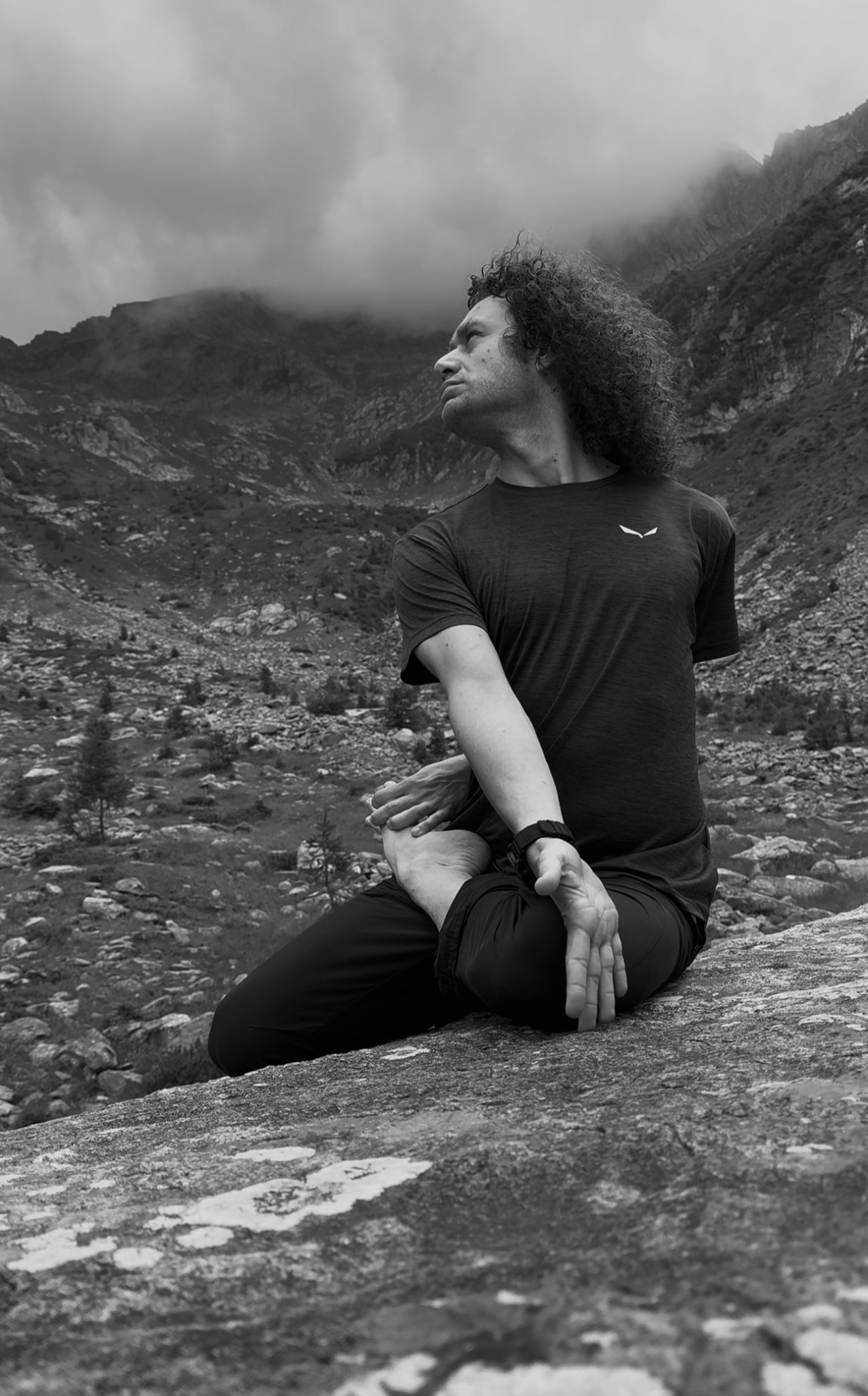
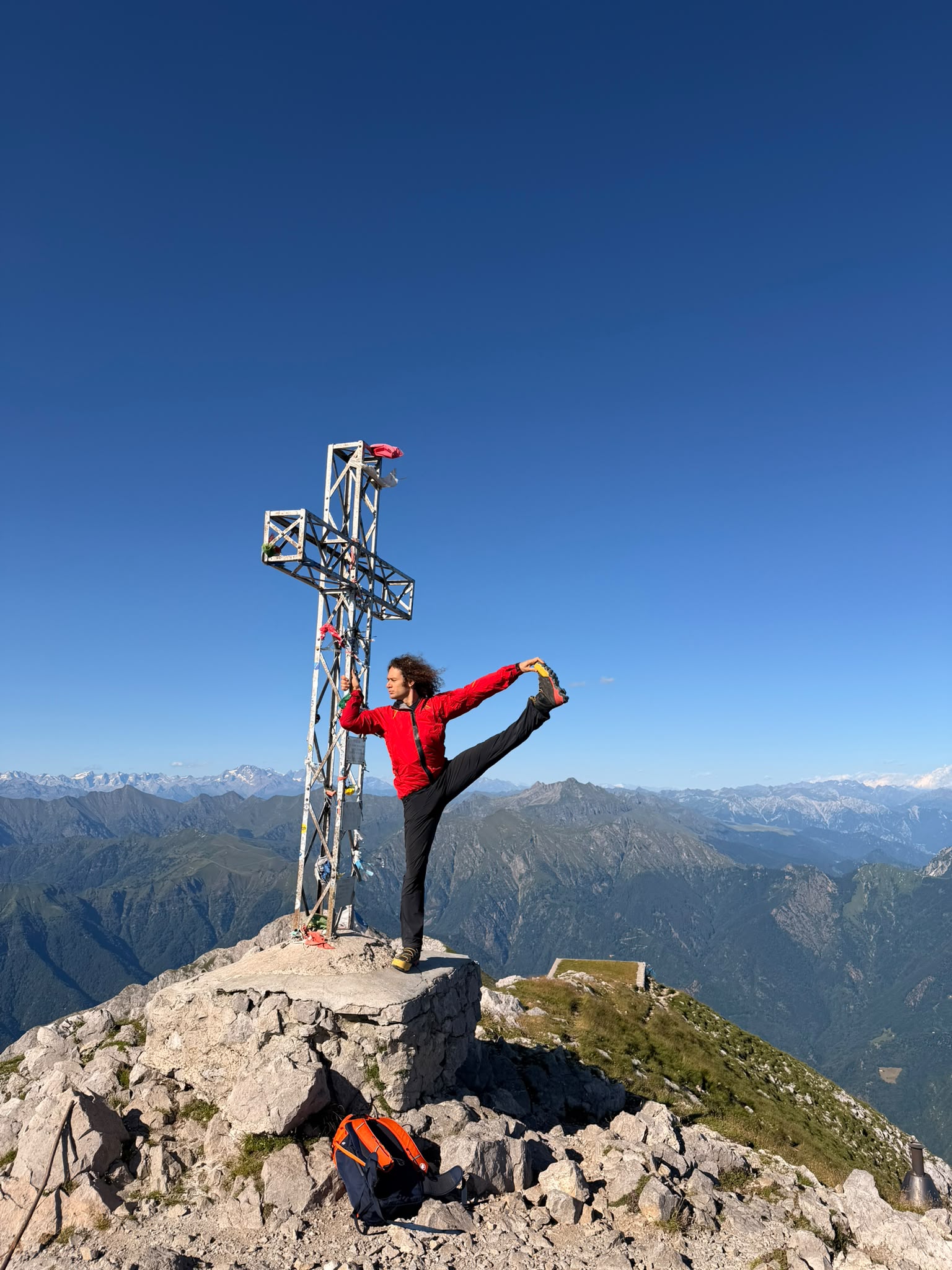
My education brings together physics, statistics and computer science, through a path in which an interest in forms has extended to data, algorithms and classical and quantum information theory. Alongside research and teaching, I practise yoga and climbing, where geometry becomes a bodily experience.
Adjunct teaching
University of Milan
Università Cattolica del Sacro Cuore
From structures to models
The studies and encounters that have shaped my scientific questions.
Bachelor’s and master’s degrees
Physics, geometry and aesthetic sensibility
I studied Physics at the University of Milano-Bicocca, writing my bachelor’s and master’s theses under the supervision of Professor Giorgio Benedek, with Professor Marco Bernasconi and Dr Ottorino Ori as co-supervisors for the master’s thesis. From the dynamics and thermodynamics of schwarzites, negatively curved carbon structures, I moved towards questions about the relationship between atomic bond arrangements and the properties of matter, approaching topology as a way of understanding the stability and vibrations of these networks.
Benedek passed on to me an aesthetic sensibility towards scientific disciplines that profoundly shaped how I see them: in carbon nanostructures, the elegance of forms invited investigation of their physical basis, while a symmetry or a curvature suggested relationships to explore through mathematics. This experience gave rise to an interest in geometry that continues to accompany me beyond research.
PhD · Modena
The doctorate: understanding matter
My PhD in Physics and Nanosciences at the University of Modena and Reggio Emilia allowed me to explore the optical and vibrational properties of graphene nanostructures, supervised by Professor Alice Ruini, with Dr Deborah Prezzi as co-supervisor, whose patience and care contributed greatly to my development as a researcher.
Studying how changes in the shape, edges or relative arrangement of these structures affect their vibrations and response to light made the relationship between geometric description and material behaviour more tangible. Working with them gave me the time and attention needed to understand the difficulties of this research, with the human relationship providing essential support for the scientific work.
Second master’s degree
Statistics and data analysis
After working in optoelectronics, I completed a second master’s degree in Data Science and Economics at the University of Milan, under the supervision of Professor Silvia Salini. Her guidance instilled a passion for statistics and data analysis, directing my attention towards the questions that precede the choice of a method: how observations are collected, which assumptions support an inference and how much confidence we can place in a conclusion. I devoted my thesis to the epistemological foundations of data analysis, bringing this education into dialogue with my background in physics.
Theoretical computer science
Learning and information theory
During the same degree, Professor Nicolò Cesa-Bianchi, who co-supervised my thesis alongside Professor Alfio Ferrara, guided me through the statistical and algorithmic foundations of machine learning, helping me understand the assumptions that make learning from data possible and the guarantees that can be established for generalisation beyond observed examples. Information theory enriched this perspective through entropy, coding and the limits of transmission; with him I also studied computability and the Turing machine as part of a broader exploration of the foundations of computation.
This meeting of physics, statistics and learning underlies my interest in classical and quantum information theory, where I encounter questions about how knowledge is represented, how uncertainty is measured and which possibilities for processing and communication depend on the physical nature of systems. I continue to explore both the connections between these descriptions and the distinctive properties of quantum information.
Knowledge and responsibility
Interpretability and the humanities
Meeting Professor Alfio Ferrara broadened this reflection towards the humanistic dimension of artificial intelligence, centring on the meaning of the knowledge produced by systems and the responsibility involved in their use. He gave me a decisive impetus to explore interpretability, because examining how a model reaches a conclusion allows us to discuss its reasons, recognise its limits and assess its relationship to the problem to which it is applied.
Postdoctoral research
Understanding and protecting systems
During my postdoctoral research at the University of Milan, Professor Danilo Bruschi introduced me to the foundations of cybersecurity and systems architecture, teaching me, and continuing to teach me, how important it is to understand their operation in order to recognise the conditions that make them vulnerable.
I began studying program behaviour and execution traces, seeking to distinguish malicious activity, such as ransomware, through models whose reasoning could be examined. Security gave a practical direction to the interest in interpretability developed during my earlier studies, requiring analytical results to be connected with what actually happens within a system. During this period, I also participated in the MUSA project.
Questions to share
Teaching and collaborations
Research and teaching
I teach Computer Science as an adjunct professor at the University of Milan, within Mathematics I and Information Technology for Geological Sciences, and Advanced Calculus and Stochastic Processes at Università Cattolica del Sacro Cuore; in the 2026/2027 academic year, I also contribute to Quantum and Post-Quantum Computing in the University of Milan’s Department of Computer Science.
In teaching, supporting courses, co-supervising theses and participating in Uni.ON, students’ questions lead me to revisit steps I tend to take for granted, seeking explanations that make both the ideas and the process of developing them understandable.
Form in experience
Yoga, climbing and mountains: configurations to inhabit, balances to find, paths to follow.
Geometry and the body
Forms take shape in the body
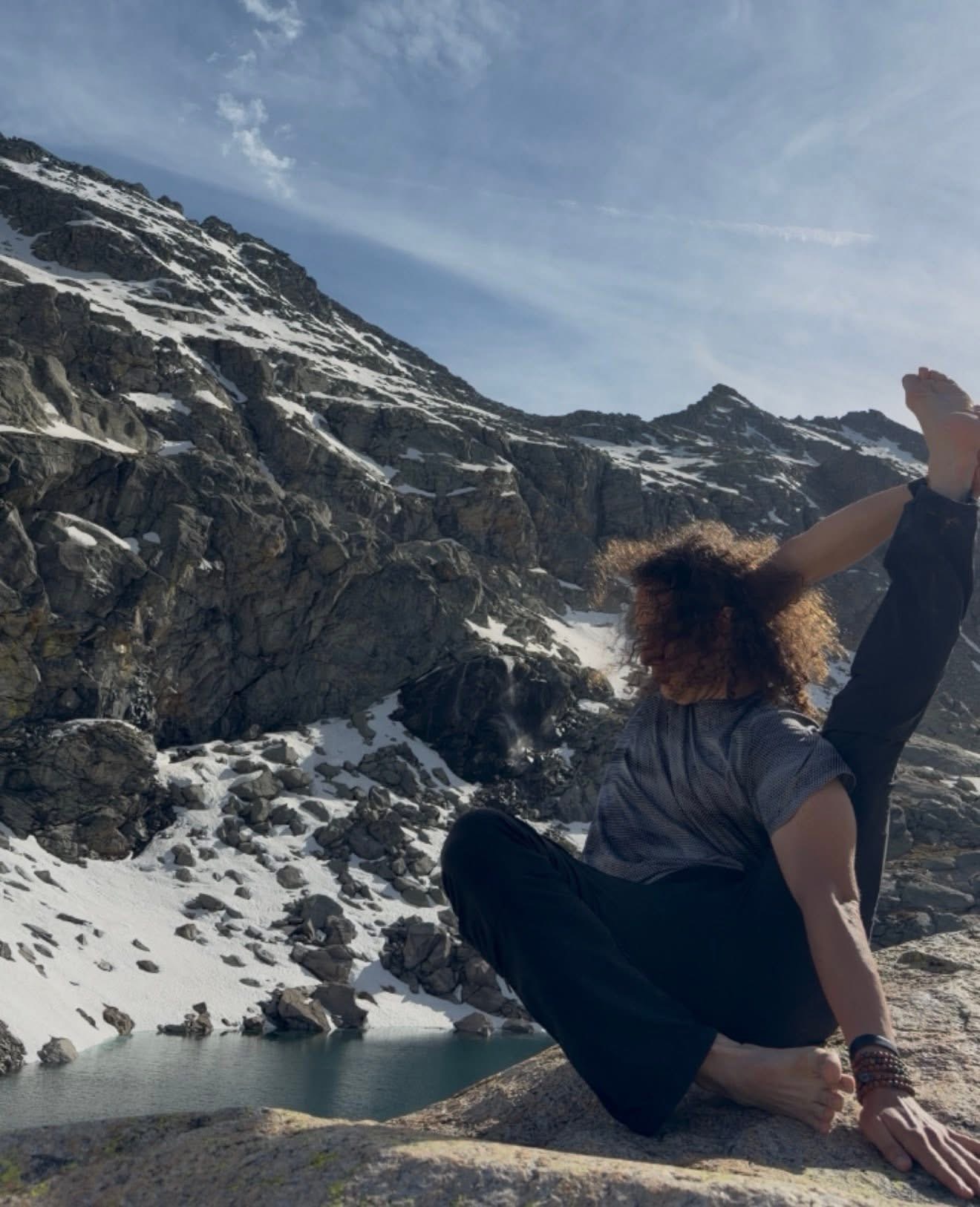
In asanas, I encounter geometry in its material realisation, as a form takes shape through points of support, weight distribution and relationships between parts of the body. A line, an angle or a curve becomes something I can understand from within, feeling how a change in movement affects the balance of the whole. This possibility of constructing and inhabiting forms sustains my interest in yoga.
Vinyasa / Yin Yoga
My path through Vinyasa
Giada Merli introduced me to Vinyasa Krama, guiding my first steps in the practice. With Alessandra Martin, who has supported me and continues to do so with great patience and attentiveness, I have discovered the multiplicity of asanas over the years, through a learning process that has transformed my relationship with my body. Her teaching plays a central role in both Vinyasa and Yin Yoga, where the time spent in asanas allows me to notice sensations and their changes; with her, in 2026, I completed a 60-hour Teacher Training course on the yogic body and the sequencing of practices.
Camilla Vigorelli has enriched this path through Vinyasa by attending to the geometry and symbolic significance of asanas, helping me understand how constructing a figure can also express an image and a meaning. With her, studying directions, points of support and proportions becomes a way of entering more deeply into the form realised by the body.
Ashtanga Vinyasa
Ashtanga: discipline and learning
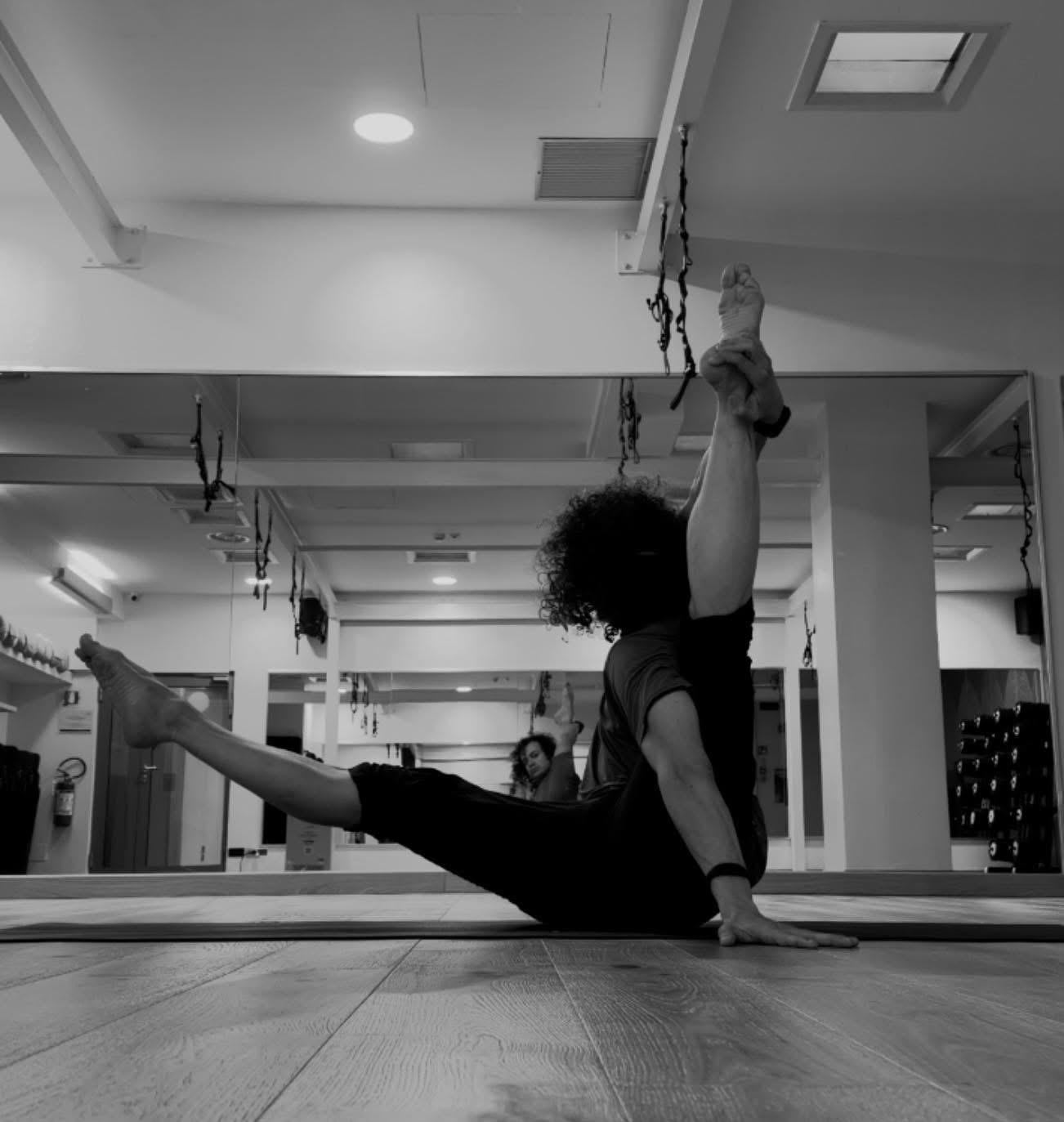
With Alexandra Santos, I began studying Ashtanga Vinyasa, which I continue to practise, recognising an affinity between its discipline and studying mathematics: returning to exercises and devoting time to difficult steps gradually reveals relationships that initially escape understanding. Her guidance has taught me the value of this constancy, through a practice in which asanas, breathing and the direction of the gaze require continuous attention, developed together with movement.
Repeating the sequence recalls the thought of Heraclitus transmitted by Plutarch:
ποταμῷ γὰρ οὐκ ἔστιν ἐμβῆναι δὶς τῷ αὐτῷ.
For it is not possible to step twice into the same river.
The order of the asanas offers a stable reference, while the body and understanding change, making each return to practice an opportunity to recognise what exercise has transformed.
Prāṇāyāma
Breathing and awareness
With all my teachers, I have also explored prāṇāyāma practices, which have made me more aware of the countless intricacies of the human body: by attending to breathing, I began to distinguish variations and sensations that previously passed through experience without my recognising them.
Climbing and mountains
Holds, balance and paths
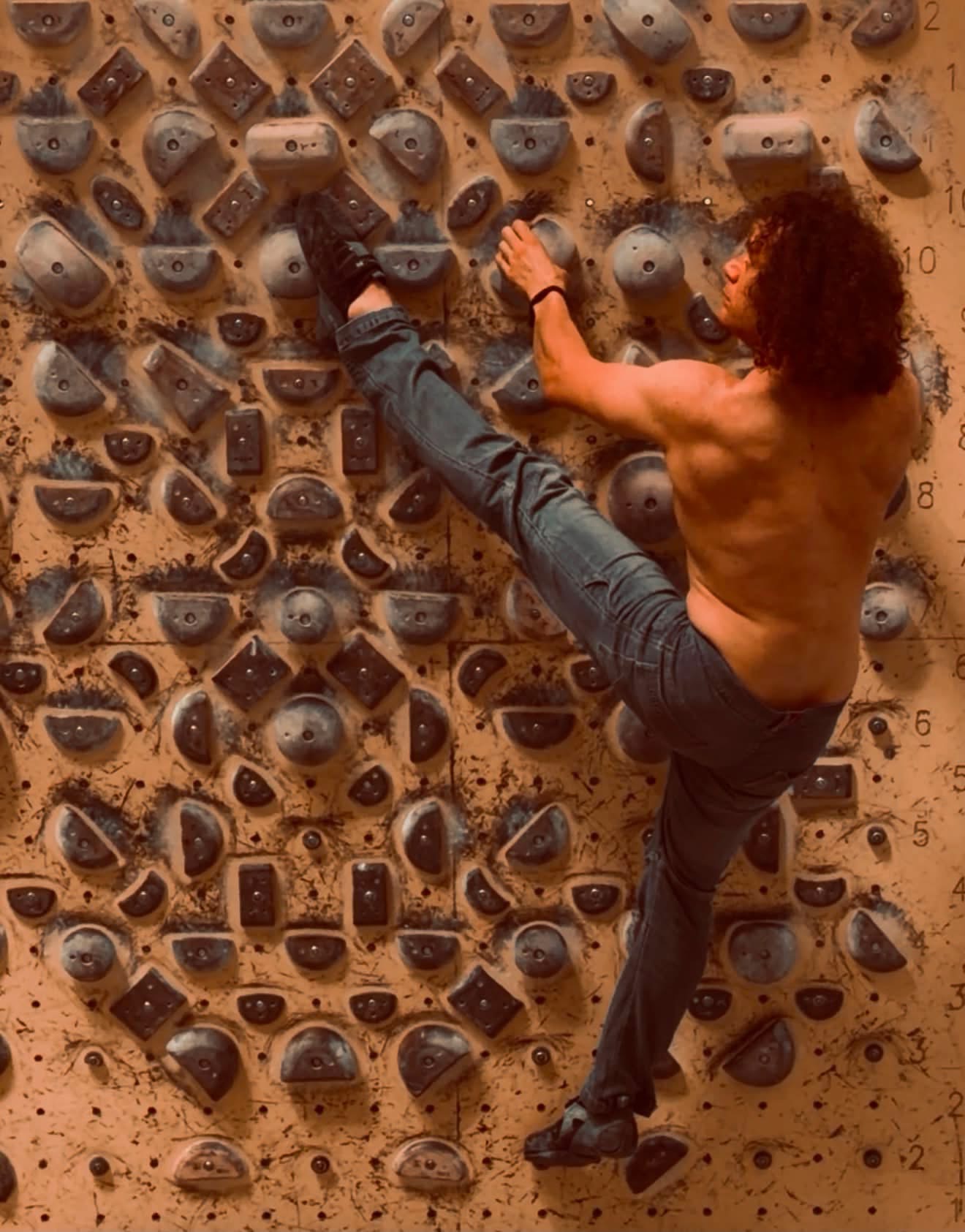
In indoor climbing, which I learned with Luca Pani, the arrangement of holds invites me to find a possible movement between different points of contact, considering where to place my weight and how to prepare the next step. When hiking in the mountains, reading the terrain and finding a walking rhythm extend this relationship with space, through an attention that adapts to the characteristics of the route.
Experience and knowledge
Attention and interpretation
Attending to emotions and expectations helps me distinguish what I feel from the stable image I tend to construct of myself, an exercise to which I attach the personal meaning of disidentification. Observing how expectations can shape perception also feeds my curiosity about judgement and interpretation; I regard these experiences as opportunities for personal reflection, distinct in nature from scientific verification, which rests on explicit hypotheses, shared procedures and independent evidence.
Education and activities
Education · degrees
M.Sc. in Data Science and Economics
Thesis: Epistemological foundations of data analysis: A combined study through statistics, computer science and physics. Supervisor: Prof. Silvia Salini. Co-supervisors: Prof. Nicolò Cesa-Bianchi and Prof. Alfio Ferrara. Final grade: 110/110 with honours.
Ph.D. in Physics and Nanoscience
Thesis: Vibrational and optical fingerprints in graphene-based nanostructures. Supervisor: Prof. Alice Ruini. Co-supervisor: Dr Deborah Prezzi.
M.Sc. in Physics
Thesis: Topological versus physical and chemical properties of carbon nanostructures. Supervisor: Prof. Giorgio Benedek. Co-supervisors: Prof. Marco Bernasconi and Dr Ottorino Ori. Final grade: 110/110 with honours.
B.Sc. in Physics
Thesis: Dynamics and thermodynamics of carbon schwarzites. Supervisor: Prof. Giorgio Benedek.
Experience · research and professional work
Research appointment (Postdoc)
April 2025 – March 2026.
Postdoctoral researchers’ representative
September 2023 – 2025.
Research fellow (Assegno di ricerca B)
Research in cybersecurity, machine learning and Big Data. Supervisor: Prof. Danilo Bruschi.
Instructor — Uni.ON project
Mathematics, physics, chemistry and biology; academic years 2024/25 and 2025/26.
Junior Data Scientist — Data Science 4Citizens
Introduction to climate time-series analysis with R.
Data Science Assistant
COVID-19 time series, forecast evaluation and migration of MATLAB code to Python.
Engineer Sales
Optoelectronic devices.
Research Fellow
Optical properties of carbon nanostructures.
Teaching appointments and contributions
Computer Science — Mathematics I and Information Technology
Adjunct teaching in Geological Sciences; continuing in the 2026/2027 academic year.
Advanced Calculus and Stochastic Processes
Adjunct teaching; continuing in the 2026/2027 academic year.
Quantum and Post-Quantum Computing
Teaching activities and course materials. Course coordinator: Danilo Bruschi.
Teaching support
Statistics, Mathematics, Statistical Theory, Mathematical Methods for Finance.
Teaching assistance in Physics
General Physics and Quantum Mechanics.
Research interests
Projects and theses
MUSA — Multilayered Urban Sustainability Action (PNRR – EU)
- Ransomware detection using explainable artificial intelligence: analysis of low-level features
- Malware detection through Explainable Artificial Intelligence: analysis of low-level system features
- Linguistic dynamics and invariants in texts: analysing semantic evolution with Word2Vec, graphs and topological indices
- Study and analysis of the role of artificial intelligence in malware creation and analysis
- Studies and analysis of generative AI techniques for malware detection
Conferences · selected talks
Estimating Shortcut Learning and Inductive Bias in Multi-View Behavioural Trace Classification
ANNPR 2026 · Milan, October 2026
From Data to Insights — The Explainability–Predictability Trade-Off
IFCS 2026 · Invited Talk, Milan, July 2026
Detection via Library Calls using Markov Random Fields: A XAI-Driven Approach to Cybersecurity
Statistics and Data Science Conference · Milan, April 2025
Hazardous Asteroids Forecast via Markov Random Fields
110th National Congress of the Italian Physical Society · Bologna
Interpretability of Machine Learning Algorithms: How These Techniques Can Correctly Guess the Physical Laws?
Statistics and Data Science Conference · Invited talk, Pavia
Methods and skills
Programming languages
Languages: Italian · English.