Topological ManifoldsMarzio De Corato
01 / Teaching

Teaching.

Start with the available materials, or consult the current courses and the archive, following the institutional references for the official syllabus and examination arrangements.

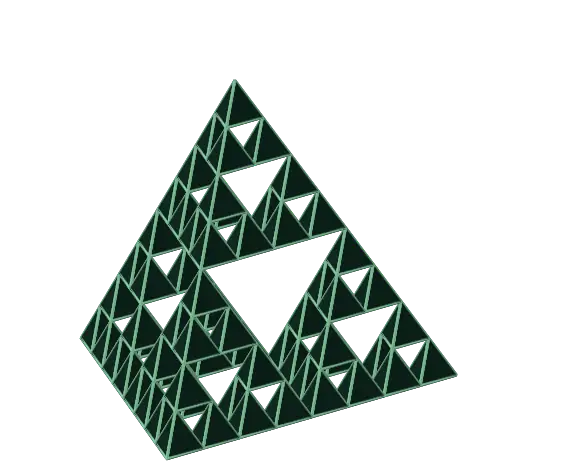
Sierpiński tetrahedron

Available materials

UniMIAcademic year 2026/2027

Quantum and Post-Quantum Computing

The seven modules lead from physical foundations and mathematical tools to quantum circuits, algorithms and protocols, with slides available to read and download as PDFs and links in each module to related activities in Quantum Lab.

Current academic year · 2026/2027

CattolicaAcademic year 2026/2027

Advanced Calculus and Stochastic Processes

The Advanced Calculus and Stochastic Processes entry for 2026/2027 brings together the course references at Università Cattolica del Sacro Cuore, providing access to the institutional page and keeping the information for this academic year distinct from other editions.

UniMIAcademic year 2026/2027

Mathematics I and Information Technology

This entry concerns the Computer Science component of Mathematics I and Information Technology for Geological Sciences in 2026/2027, with links to the University of Milan’s institutional information about the course.

Course archive

CattolicaAcademic year 2025/2026

Advanced Calculus and Stochastic Processes

The Advanced Calculus and Stochastic Processes entry for 2025/2026 brings together the course references at Università Cattolica del Sacro Cuore, providing access to the institutional page and keeping the information for this academic year distinct from other editions.

UniMIAcademic year 2025/2026

Mathematics I and Information Technology

This entry concerns the Computer Science component of Mathematics I and Information Technology for Geological Sciences in 2025/2026, with links to the University of Milan’s institutional information about the course.

CattolicaAcademic year 2024/2025

Advanced Calculus and Stochastic Processes

The Advanced Calculus and Stochastic Processes entry for 2024/2025 brings together the course references at Università Cattolica del Sacro Cuore, providing access to the institutional page and keeping the information for this academic year distinct from other editions.

Explore and experiment

Interactive laboratories

Independent environments to explore alongside the course materials.

Explore the galaxy map ↗
Interactive laboratory

Quantum Lab

Through Quantum Lab’s simulations, you can accompany the seven course modules with an exploration of phenomena, circuits and protocols, observing how representations and results change as you adjust the available parameters and returning to the course materials to interpret what you have seen.

Laboratory interface: Italian.

Opens in this tab, with its own interface.

Interactive laboratory

GeoStat Lab

GeoStat Lab lets you explore statistical methods used in Earth sciences by comparing samples, time series and spatial data as you change model assumptions and parameters. Visual representations, mathematical explanations and R code accompany each path, helping you interpret the results and reconstruct the analysis that produced them.

Laboratory interface: Italian.

Opens in this tab, with its own interface.

Explore Topological Manifolds

Complete search page ↗

Graph theory and cyber-attacks

Unaffected nodeCompromised node

When devices, services and identities are described through their relationships, system security can be studied as a structural problem in which both a vulnerability and the paths through which it could expose other resources matter.

From connections to attack paths

A graph G = (V, E) consists of vertices V and edges E. In an asset network, vertices may represent devices or services, while edges describe connections, dependencies or trust relationships. An attack graph instead represents conditions, actions or system states, depending on the model, to examine how several steps can combine into a compromise.

G = (V, E)

The analogy with an epidemic helps illustrate how a compromise can spread between nodes, provided that the conditions for each transition are considered. Credentials, permissions, vulnerabilities and configurations determine which paths are feasible; a connection alone describes a possibility of communication.

How this supports defence

Path analysis helps identify the resources reachable from an initial position and the connections that form critical passages. Comparing the graph before and after a change shows how network segmentation, reduced privileges or a vulnerability fix can interrupt particular sequences. A node’s importance depends on its role and context, so its number of connections gives only a partial account of risk.

Reading this figure

Red nodes marked with a cross represent compromised systems in the scenario; green nodes remain unaffected, while pale pulses follow the propagation paths. The map provides a conventional geographical layout for an illustrative network whose links and timing are constructed to clarify the phenomenon. It does not show observed attacks or estimate compromise probabilities.
Explore the model

The model loads when opened.

Drag or use the arrow keys to orient the model; + and − control zoom. Hold Ctrl or ⌘ to zoom with the wheel. Esc closes the dialog.

Topological Manifolds

Interface preferences

Sound remains optional and is controlled by the speaker in the header. Background music has its own player below.

Card entry, clicks and page changes use soft accents; scrolling stays silent.

Original soundtrack · 4:30

Descending Fields

0:00 / 4:30

Music starts when you press Play.

About the composition ↗
Topological Manifolds

Scientific formulas

Relations, assumptions and study references. These are not empirical results from the author’s research.

Research · Teaching · Exploration

Topological
Manifolds

Follow the code, explore the forms. Choose how to enter.

Music and effects have separate volume controls.

topological-manifolds / terminal
Visual transition

Opening the laboratory

Opening the laboratory…

0%

Destination