Topological ManifoldsMarzio De Corato
01 / Teaching

Quantum and Post-Quantum Computing.

University of Milan · Academic year 2026/2027

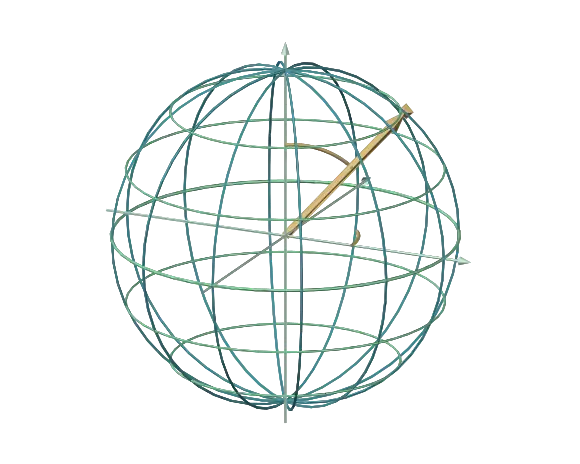
Bloch sphere
The course descriptions are in English. The downloadable slides are the original files and retain their source language.
Learning path

The seven modules lead from physical foundations and mathematical tools to quantum circuits, algorithms and protocols, with slides available to read and download as PDFs and links in each module to related activities in Quantum Lab.

Starting from the simulation of physical systems and the mathematical tools used to describe them, the materials introduce quantum gates and circuits, on which the Deutsch–Jozsa, Bernstein–Vazirani, Simon, Shor and Grover algorithms are built; the course continues with BB84, superdense coding and error correction, before examining the operational limits of quantum key distribution and its relationship with post-quantum cryptography.

7modules
1,950PDF pages
PDFopen access

You can follow the modules in order, moving from phenomena to mathematical tools and then to circuits, algorithms and protocols, or use the index to return to a topic you wish to revisit.

Quantum and post-quantum

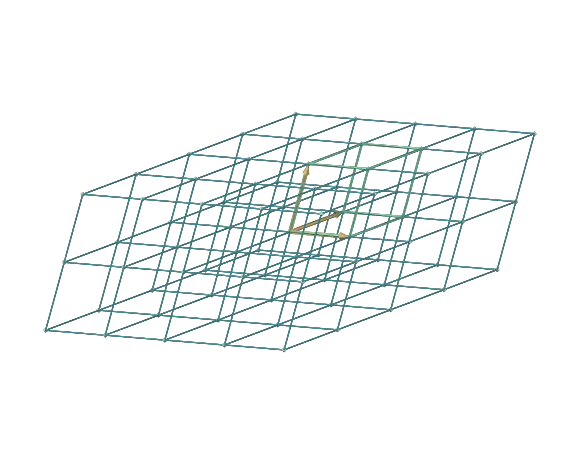
The Bloch sphere describes the pure states of a qubit, while lattices provide the mathematical structure underlying some post-quantum cryptographic constructions, linking two fields that address different problems.

Lattice and basis
Downloadable modules

Course materials

01
Module 01

Physical foundations and simulation of quantum systems

From classical and statistical simulation to waves, interference, two-alternative states and composite systems. The module addresses the loss of interference, information and irreversibility, leading to the transition from quantum mechanics to computation.

  • Classical and statistical simulation
  • Waves, interference and measurement
  • Qubits, composite systems and the environment
  • Information and the construction of a quantum computer

519 PDF pages · 3.1 MB · Marzio De Corato; Danilo Bruschi

Reading task

Following the progression from simulations to waves and two-alternative states, identify where relative phase changes observed probabilities and how interaction with the environment suppresses interference.

Suggested preparation

Function graphs, ratios and elementary probability are useful starting points; the next module revisits the algebraic tools.

Topic map · 12

Material in Italian · original section titles

  1. Parte I – La simulazione classicaPDF page 13 ↗
  2. Parte II – La simulazione statisticaPDF page 54 ↗
  3. Parte III – Onde e interferenzaPDF page 96 ↗
  4. Parte IV – L'interferenza di particelle singolePDF page 129 ↗
  5. Parte V – Stati a due alternativePDF page 169 ↗
  6. Parte VI – Il calcolo quantisticoPDF page 226 ↗
  7. Parte VII – Due qubit e stati congiuntiPDF page 250 ↗
  8. Parte VIII – Ambiente e perdita di interferenzaPDF page 281 ↗
  9. Parte IX – Informazione e irreversibilitàPDF page 304 ↗
  10. SintesiPDF page 312 ↗
  11. Parte X – Come si costruisce un computer quantisticoPDF page 329 ↗
  12. Parte XI – Dalla meccanica quantistica al calcolo quantisticoPDF page 495 ↗

Destinations follow bookmarks in the original documents; the number refers to the physical PDF page, which may differ from the printed slide number.

Study → experiment

After reading the slides, you can open these activities to compare the module’s topics with the laboratory’s representations.

Opens in a new tab. Laboratory interface: Italian.

Licence stated in the document: CC BY-NC-SA 4.0.

02
Module 02

Mathematical foundations: linear algebra, probability and measurement

Complex numbers, vectors, matrices and tensor products establish the language of computation; probability, states and measurement connect mathematical transformations to observable outcomes.

  • Vectors and linear transformations
  • Tensor products and matrix functions
  • Probability and data
  • Quantum states and measurement

514 PDF pages · 2.7 MB · Marzio De Corato; Danilo Bruschi

Reading task

After working with complex numbers, vectors and operators, reconstruct a projective measurement, specifying its basis, outcome probabilities and state update.

Suggested preparation

The first module can be read alongside the linear algebra and probability review in the opening sections of these slides.

Topic map · 31

Material in Italian · original section titles

  1. Numeri complessiPDF page 11 ↗
  2. Vettori, basi e coordinatePDF page 33 ↗
  3. Prodotto interno e ortogonalitàPDF page 45 ↗
  4. Matrici e trasformazioni lineariPDF page 76 ↗
  5. Aggiunto, hermitiane e unitariePDF page 89 ↗
  6. Autovalori e autovettoriPDF page 101 ↗
  7. Diagonalizzazione e spettroPDF page 113 ↗
  8. Cambio di base e commutatoriPDF page 138 ↗
  9. Nucleo, immagine e rangoPDF page 160 ↗
  10. Prodotto tensorialePDF page 167 ↗
  11. Funzioni di matriciPDF page 180 ↗
  12. Un problema di algebra completoPDF page 203 ↗
  13. Esiti ed eventiPDF page 217 ↗
  14. Variabili aleatorie discretePDF page 223 ↗
  15. Valore attesoPDF page 229 ↗
  16. Varianza e dispersionePDF page 235 ↗
  17. Prove ripetute e binomialePDF page 242 ↗
  18. Frequenze e precisionePDF page 253 ↗
  19. Condizionamento e BayesPDF page 264 ↗
  20. Distribuzioni congiuntePDF page 271 ↗
  21. Dal vettore al ketPDF page 319 ↗
  22. Bra e prodotto internoPDF page 331 ↗
  23. Prodotto diadico e proiettoriPDF page 345 ↗
  24. Operatori e trasformazioni del qubitPDF page 354 ↗
  25. Autostati e decomposizione spettralePDF page 389 ↗
  26. Regola di BornPDF page 396 ↗
  27. Misura e aggiornamento dello statoPDF page 410 ↗
  28. Valori medi e dispersioni quantistichePDF page 424 ↗
  29. Osservabili incompatibiliPDF page 433 ↗
  30. Sistemi compostiPDF page 449 ↗
  31. Un esperimento calcolato dall’inizio alla finePDF page 488 ↗

Destinations follow bookmarks in the original documents; the number refers to the physical PDF page, which may differ from the printed slide number.

Study → experiment

After reading the slides, you can open these activities to compare the module’s topics with the laboratory’s representations.

Opens in a new tab. Laboratory interface: Italian.

Licence stated in the document: CC BY-NC-SA 4.0.

03
Module 03

Quantum circuits: gates, reversibility and the Deutsch and Deutsch–Jozsa algorithms

Reading and executing circuits, single- and multi-qubit gates, composition, phases and interference. Reversible logic leads to the Deutsch and Deutsch–Jozsa algorithms, developed through examples and checks.

  • Single-qubit gates and composition
  • Phases, interference and registers
  • CNOT, Toffoli and ancillary qubits
  • Deutsch and Deutsch–Jozsa

177 PDF pages · 1.0 MB · Marzio De Corato; Danilo Bruschi

Reading task

Read a circuit from left to right, following the register through its gates and comparing the role of phases in Deutsch’s derivation and its Deutsch–Jozsa generalisation.

Suggested preparation

Revisit tensor products, unitary operators, the Born rule and changes of basis in module two.

Topic map · 13

Material in Italian · original section titles

  1. 1. Lettura ed esecuzionePDF page 3 ↗
  2. 2. Porte a un qubitPDF page 11 ↗
  3. 3. Composizione e inversionePDF page 26 ↗
  4. 4. Fasi e interferenzaPDF page 36 ↗
  5. 5. Registri di due qubitPDF page 47 ↗
  6. 6. CNOT, Toffoli e ausiliariPDF page 59 ↗
  7. 7. Deutsch: derivazione commentataPDF page 94 ↗
  8. 8. Interpretazione e prosecuzionePDF page 115 ↗
  9. 9. Deutsch–Jozsa su più bitPDF page 119 ↗
  10. A. Verifiche e dimostrazioniPDF page 148 ↗
  11. B. Preparazioni alternativePDF page 155 ↗
  12. C. AND, fase e ripristinoPDF page 171 ↗
  13. ReferencesPDF page 177 ↗

Destinations follow bookmarks in the original documents; the number refers to the physical PDF page, which may differ from the printed slide number.

Study → experiment

After reading the slides, you can open these activities to compare the module’s topics with the laboratory’s representations.

Opens in a new tab. Laboratory interface: Italian.

Licence stated in the document: CC BY-NC-SA 4.0.

04
Module 04

Quantum algorithms: Bernstein–Vazirani and Simon

Two hidden-string reconstruction problems: the coefficients of a binary parity and the XOR relation between inputs with the same output. Oracles, interference and measurement are followed through to reconstruction of the answer.

  • Binary parities and hidden strings
  • Oracles and phase marking
  • Bernstein–Vazirani
  • Simon and binary constraints

179 PDF pages · 0.9 MB · Marzio De Corato; Danilo Bruschi

Reading task

Compare Bernstein–Vazirani and Simon through their oracles and measurement information, distinguishing query counts from the classical work needed to interpret outcomes.

Suggested preparation

Circuit reading from module three, bit arithmetic, binary inner products and linear equations are useful preparation.

Topic map · 6

Material in Italian · original section titles

  1. Bernstein–VaziraniPDF page 3 ↗
  2. SimonPDF page 60 ↗
  3. Simon: quante prove servonoPDF page 134 ↗
  4. Simon: confronto classico e risorsePDF page 147 ↗
  5. Confronto dei procedimentiPDF page 156 ↗
  6. AppendicePDF page 159 ↗

Destinations follow bookmarks in the original documents; the number refers to the physical PDF page, which may differ from the printed slide number.

Study → experiment

After reading the slides, you can open these activities to compare the module’s topics with the laboratory’s representations.

Opens in a new tab. Laboratory interface: Italian.

Licence stated in the document: CC BY-NC-SA 4.0.

05
Module 05

Shor’s algorithm: modular arithmetic, RSA and the Fourier transform

Divisors, congruences, inverses and modular powers prepare the construction of RSA. Quantum period finding and the Fourier transform lead to message recovery; a final discussion connects the period to factorisation.

  • Modular arithmetic and Euclid’s algorithm
  • RSA and the period of the ciphertext
  • Fourier transform and period finding
  • From measurement to decryption and factorisation

208 PDF pages · 1.5 MB

Reading task

Follow the chain linking modular arithmetic, period finding and information recovery, distinguishing the Fourier transform from classical measurement processing.

Suggested preparation

Revisit quantum circuits and complex numbers; divisibility, congruences and order are developed in the opening sections.

Topic map · 13

Material in Italian · original section titles

  1. 01 Il problema di ShorPDF page 4 ↗
  2. 02 Divisori e coprimalitàPDF page 15 ↗
  3. 03 Congruenze e inversiPDF page 34 ↗
  4. 04 Potenze e ordinePDF page 57 ↗
  5. 05 La costruzione di RSAPDF page 82 ↗
  6. 06 Il periodo del cifratoPDF page 115 ↗
  7. 07 La difficoltà della ricercaPDF page 128 ↗
  8. 08 La rappresentazione di FourierPDF page 137 ↗
  9. 09 La ricerca quantistica del periodoPDF page 152 ↗
  10. 10 Dalla misura al messaggioPDF page 169 ↗
  11. 11 La realizzazione del circuitoPDF page 185 ↗
  12. A Il periodo e i fattori (facoltativo)PDF page 201 ↗
  13. Riferimenti bibliograficiPDF page 207 ↗

Destinations follow bookmarks in the original documents; the number refers to the physical PDF page, which may differ from the printed slide number.

Study → experiment

After reading the slides, you can open these activities to compare the module’s topics with the laboratory’s representations.

Opens in a new tab. Laboratory interface: Italian.

06
Module 06

Grover’s algorithm and amplitude amplification

The search for valid candidates is developed through oracles, reflections and rotations in state space. The examples introduce multiple solutions, an unknown number of solutions and amplitude amplification, keeping costs and limitations explicit.

  • Search, verifiers and queries
  • Oracle, diffuser and Grover rotation
  • Multiple solutions and unknown solution counts
  • Amplitude amplification and resource analysis

253 PDF pages · 1.1 MB

Reading task

Interpret Grover iterations as rotations in the relevant subspace and examine how the number of solutions determines when amplification should stop.

Suggested preparation

Revisit state normalisation, reversible oracles and reflections; four- and eight-candidate examples introduce the geometric construction.

Topic map · 12

Material in Italian · original section titles

  1. Il problema della ricercaPDF page 4 ↗
  2. Stati e probabilitàPDF page 21 ↗
  3. Oracoli reversibiliPDF page 42 ↗
  4. Quattro candidatiPDF page 61 ↗
  5. Otto candidatiPDF page 78 ↗
  6. Riflessioni e sottospaziPDF page 97 ↗
  7. La rotazione di GroverPDF page 123 ↗
  8. Circuiti e ausiliariPDF page 146 ↗
  9. Più soluzioniPDF page 175 ↗
  10. Il numero di soluzioni ignotoPDF page 192 ↗
  11. Amplificazione di ampiezzaPDF page 210 ↗
  12. Costo e uso dell’algoritmoPDF page 230 ↗

Destinations follow bookmarks in the original documents; the number refers to the physical PDF page, which may differ from the printed slide number.

Study → experiment

After reading the slides, you can open these activities to compare the module’s topics with the laboratory’s representations.

Opens in a new tab. Laboratory interface: Italian.

07
Module 07

Quantum protocols: BB84, QKD, superdense coding and error correction

Key distribution with BB84, QKD requirements and limitations, comparison with post-quantum cryptography, superdense coding and entropy. The final part describes quantum codes, syndromes and error recovery.

  • BB84 and key distribution
  • QKD: requirements, limitations and relationship with PQC
  • Superdense coding and entropy
  • Error correction and logical qubits

100 PDF pages · 0.6 MB

Reading task

Compare quantum key distribution, superdense coding and error correction, specifying shared resources and what can be inferred from measurements.

Suggested preparation

Joint states, measurement bases and controlled circuits from the first three modules are useful preparation.

Topic map · 4

Material in Italian · original section titles

  1. BB84 e distribuzione delle chiaviPDF page 10 ↗
  2. La QKD nelle comunicazioni protettePDF page 29 ↗
  3. Codifica superdensaPDF page 46 ↗
  4. Correzione degli errori quantisticiPDF page 57 ↗

Destinations follow bookmarks in the original documents; the number refers to the physical PDF page, which may differ from the printed slide number.

Study → experiment

After reading the slides, you can open these activities to compare the module’s topics with the laboratory’s representations.

Opens in a new tab. Laboratory interface: Italian.

The slide numbering inside a PDF may differ from its total page count. Use the course index to move between modules.
← All courses

Explore Topological Manifolds

Complete search page ↗

Graph theory and cyber-attacks

Unaffected nodeCompromised node

When devices, services and identities are described through their relationships, system security can be studied as a structural problem in which both a vulnerability and the paths through which it could expose other resources matter.

From connections to attack paths

A graph G = (V, E) consists of vertices V and edges E. In an asset network, vertices may represent devices or services, while edges describe connections, dependencies or trust relationships. An attack graph instead represents conditions, actions or system states, depending on the model, to examine how several steps can combine into a compromise.

G = (V, E)

The analogy with an epidemic helps illustrate how a compromise can spread between nodes, provided that the conditions for each transition are considered. Credentials, permissions, vulnerabilities and configurations determine which paths are feasible; a connection alone describes a possibility of communication.

How this supports defence

Path analysis helps identify the resources reachable from an initial position and the connections that form critical passages. Comparing the graph before and after a change shows how network segmentation, reduced privileges or a vulnerability fix can interrupt particular sequences. A node’s importance depends on its role and context, so its number of connections gives only a partial account of risk.

Reading this figure

Red nodes marked with a cross represent compromised systems in the scenario; green nodes remain unaffected, while pale pulses follow the propagation paths. The map provides a conventional geographical layout for an illustrative network whose links and timing are constructed to clarify the phenomenon. It does not show observed attacks or estimate compromise probabilities.

Explore the model

The model loads when opened.

Drag or use the arrow keys to orient the model; + and − control zoom. Hold Ctrl or ⌘ to zoom with the wheel. Esc closes the dialog.

Topological Manifolds

Interface preferences

Sound remains optional and is controlled by the speaker in the header. Background music has its own player below.

Card entry, clicks and page changes use soft accents; scrolling stays silent.

Original soundtrack · 4:30

Descending Fields

0:00 / 4:30

Music starts when you press Play.

About the composition ↗
Topological Manifolds

Scientific formulas

Relations, assumptions and study references. These are not empirical results from the author’s research.

Research · Teaching · Exploration

Topological
Manifolds

Follow the code, explore the forms. Choose how to enter.

Music and effects have separate volume controls.

topological-manifolds / terminal
Visual transition

Opening the laboratory

Opening the laboratory…

0%

Destination